
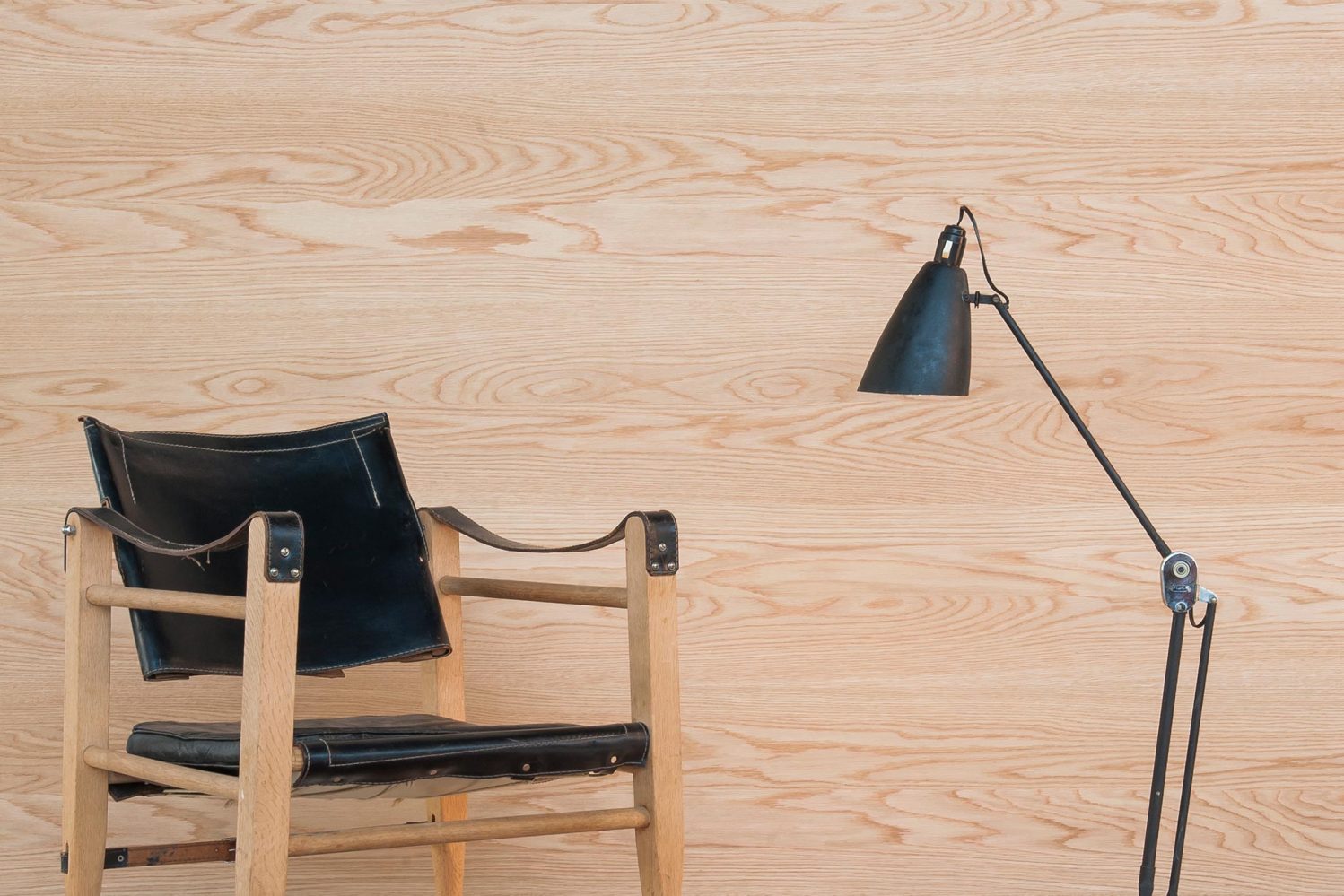
A much-loved and commonly used timber in interiors, oak is well and truly a design classic. There is oak, which comes from American or European hardwood species, but to make it confusing some Australian eucalypts with similar characteristics are also referred to as oak. There is also our range of recomposed veneer, designed to express the grain and colour of oak. Each has its own grain, colour and character.
True oak: the genus behind the grain
The oak of European and American joinery belongs to the botanical genus Quercus. This is the timber most designers picture when they specify oak – an open, tactile grain in a honeyed to pale-brown tone that ages beautifully.
European oak, (generally Quercus robur or Quercus petraea species) carries a warm colour and a grain that ranges from tight and even to gently characterful. American White Oak , (derived from about 8 different species but traditionally Quercus alba) reads cooler and straighter, with a fine, consistent grain that suits restrained interiors. American Red Oak, (several species, mainly Quercus rubra and Quercus falcata) is coarser and pinker, with a more open pore structure.
Quarter cut oak reveals medullary rays, these natural patterns give oak its silver grain, a shimmering figure known variously as ray fleck or, historically, tiger oak. It’s characteristic of the Quercus species, and one of the reasons true oak remains such a favourite.
Tasmanian Oak: the oak that isn’t oak
It’s not uncommon to hear the name Tasmanian Oak in Australia. Despite the name, it’s not a true oak, but in fact the trade name for a group of eucalypt species – most commonly Eucalyptus regnans, Eucalyptus obliqua and Eucalyptus delegatensis – with no botanical relationship to the Quercus family.
In the veneer trade the distinction goes further. Veneer leaves cut from these eucalypts are sorted by tone, with the lighter sheets sold as ash and the darker sheets sold as oak, though the species remain the same. The grain is straighter and more uniform than true oak, without the ray fleck, and the colour veers towards a pale straw to soft pink range.
At Elton Group, we have a range that celebrates the authentic appeal of Eucalyptus, available in Eveneer WoodWall.
Recomposed oak: oak character, made consistent
A third oak sits alongside the naturals. Recomposed oak veneers recreate the look of oak from responsibly sourced timber from fast growing trees, reformed into a repeatable familiar oak pattern. Where a natural oak log expresses the variation of the tree it came from, recomposed oak offers a consistent and even colour and grain across every sheet.
For large runs – multi-residential joinery, long panelled corridors, banks of matching cupboard fronts – this consistency is key.
How oak reads once it is cut
Cut and figure shape oak as much as species does. Crown cut oak veneer produces the cathedral figure, a bold, arched grain that a good joiner will align. Quarter cut oak delivers a straighter grain and, in true oak, the silver ray fleck. Rift cut oak slices at a slight angle to the growth rings to minimise that fleck, producing a more even, linear grain.
To understand more about cuts and matching techniques, read our comprehensive guide.
The tonal range of oak
Oak is versatile when it comes to colour, able to be dyed, stained and treated, which is part of its enduring appeal. Beyond its natural tone, oak can be smoked to a deep grey brown, lime washed to a soft white tone to sit within a considered palette.
Seeing oak in person
Oak rewards a closer look. The difference between a European oak, an American cut and a recomposed oak is best understood in the hand and in natural light. Designers can order oak veneer samples or speak with an Elton Group representative to see larger sheets in the context of a project.
Oak veneer questions, answered
Is Tasmanian Oak real oak?
No. Tasmanian Oak is a trade name for a group of Australian eucalypt species – most commonly Eucalyptus regnans, Eucalyptus obliqua and Eucalyptus delegatensis. True oak belongs to the botanical genus Quercus, and the two have no botanical relationship. The name points to a similarity in colour and working properties, and the grain of the eucalypts is straighter and more uniform, without the ray fleck of true oak.
What is the difference between Tasmanian Oak and Tasmanian Ash?
In the Australian veneer trade the two names often describe the same eucalypt species, sorted by tone. Lighter leaves are sold as ash and darker leaves are sold as oak. Specifiers working to a tight colour range should confirm the tonal band rather than the trade name.
Is French Oak the same as European Oak?
Yes. French Oak is European oak sourced from France, and the species is the same. European oak has a warm colour and a grain that ranges from tight and even to gently characterful, with variation shaped by growing region and by the individual log.
What is the difference between American White Oak and American Red Oak?
American White Oak has a cooler tone and a fine, straight grain that suits restrained interiors. American Red Oak has a pinker tone, a coarser grain and a more open pore structure. Both are Quercus species.
What is quarter cut oak?
Quarter cut oak is veneer sliced from the log at an angle close to 90 degrees to the growth rings, which produces a straight and even grain down the length of the leaf. In true oak, the cut also reveals the medullary rays and the silver ray fleck that comes with them.
Can oak veneer be stained or coloured?
Yes, and its ability to be dyed is part of its enduring appeal. Oak accepts dye, stain and surface treatment, and can be smoked to a deep grey brown, lime washed or toned to a particular colour.
Explore a range of Oak veneer
Naturals in Eveneer Raw and Prefinished
 |
 |
 |
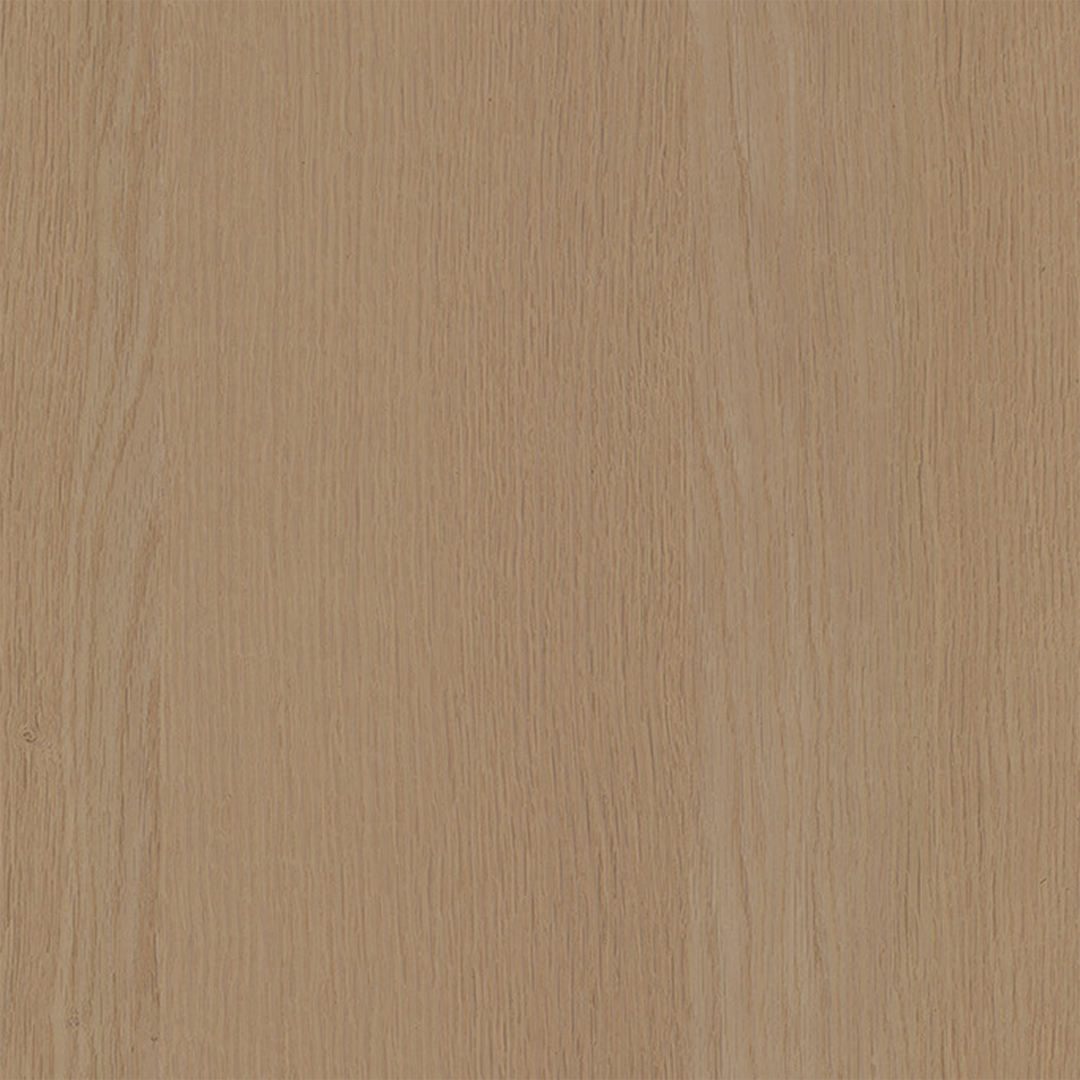 |
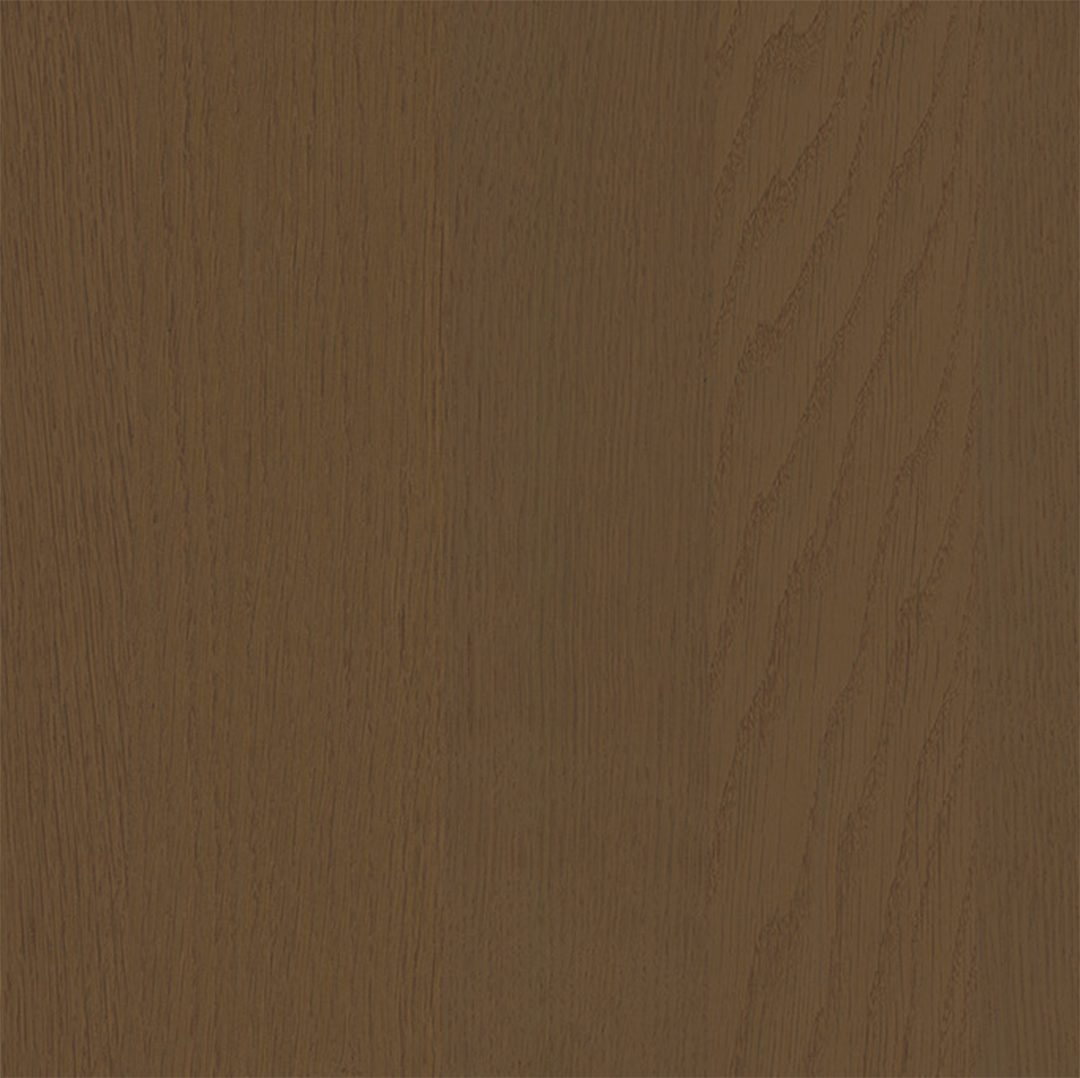
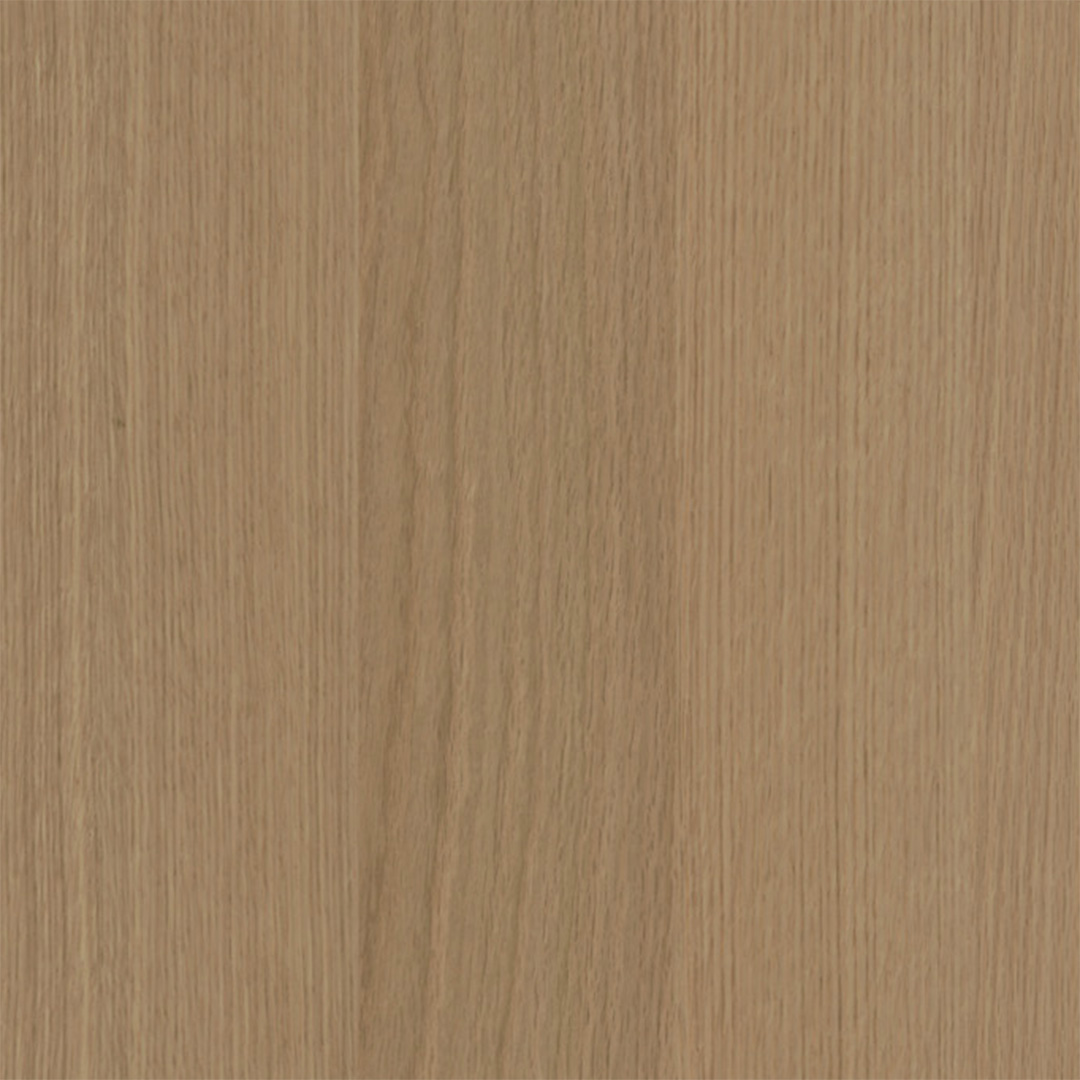
| Nougat Oak | Bourbon Oak | White Oak Silk | Sand Oak |
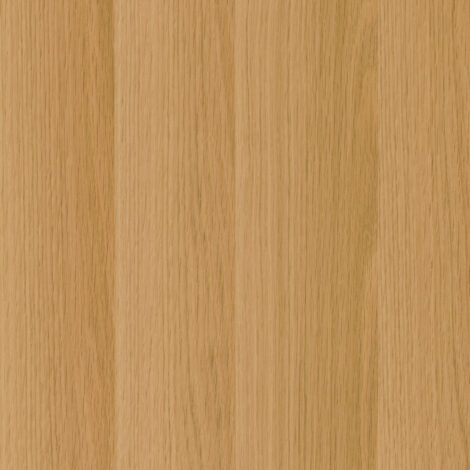
Natural oak options in Eveneer WoodWall – real timber veneer wall covering
 |
 |
 |
 |
| Knotty Oak Smoked | Knotty Oak | White Oak Planked | Eucalyptus Quartered |
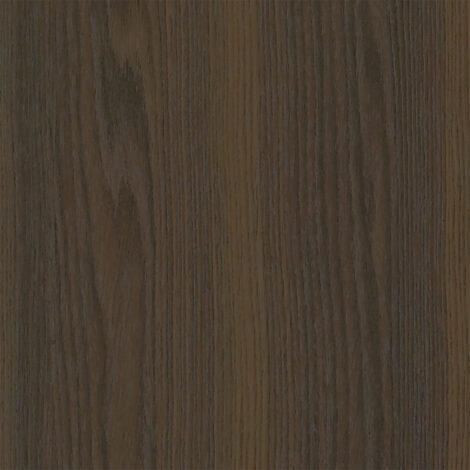
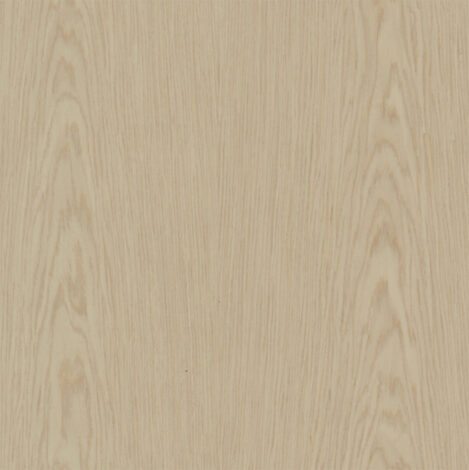
Eveneer Raw and Eveneer Prefinished recomposed veneers – consistent oak grain
 |
 |
||
| Moka Oak | Nordic Oak |